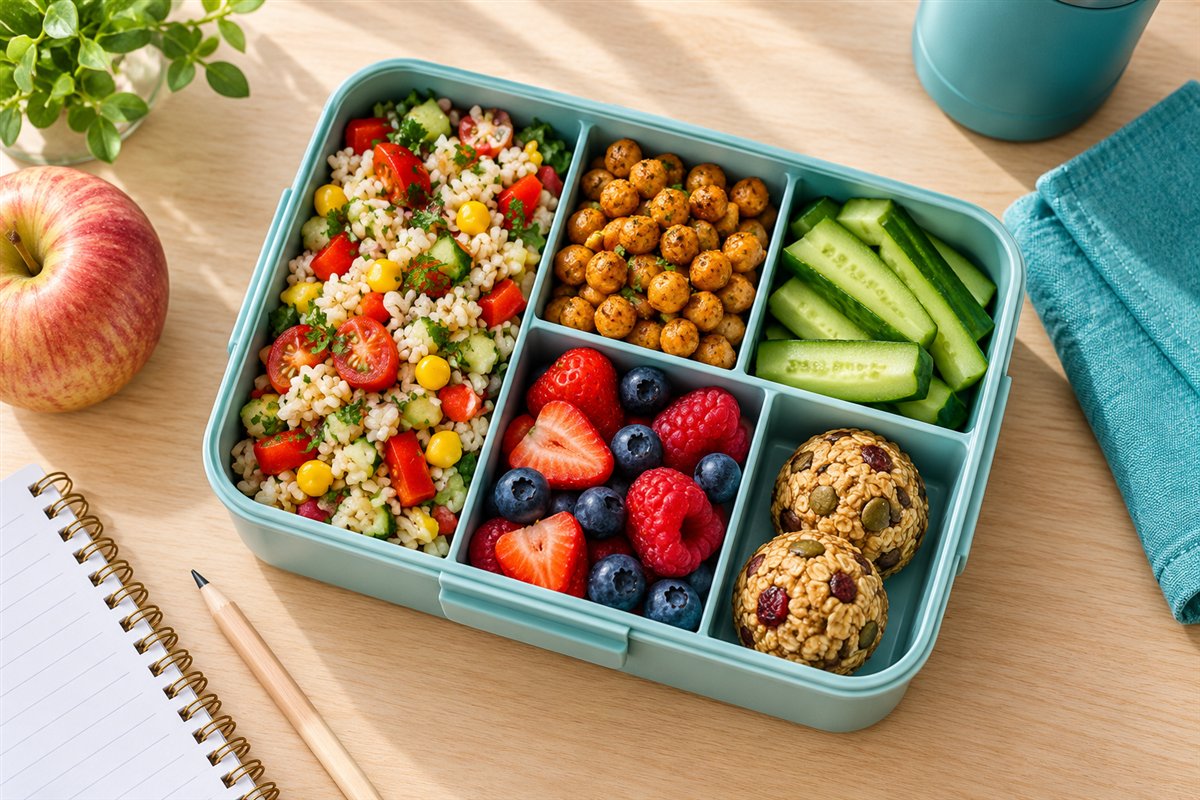
A dependable lunchbox combines energy, protein, produce and enjoyment while staying within the eater's dietary requirements.
Use a four-part formula
- Energy: suitable bread, rice, potato, pasta or gluten-free grains.
- Protein: beans, lentils, tofu, eggs or another individually suitable option.
- Fruit and vegetables: include different colours and textures.
- Flavour and enjoyment: a dip, dressing, seasoning or favourite safe treat.
Think beyond sandwiches
Rice bowls, potato salads, soups in a flask and leftover curry can provide variety. Use an insulated lunch bag and cold packs where needed, and keep hot foods in equipment designed for safe hot holding.
Avoid cross-contact
Prepare the lunch on a clean surface with clean utensils. Clearly labelled containers help prevent mix-ups at school or work. Where allergies are severe, discuss shared tables, cutlery and food-swapping rules with the relevant organisation.
Make variety manageable
Rotate one part at a time rather than inventing a completely new lunch daily. For example, keep the same grain bowl base but change the vegetables, sauce or protein.
Invite feedback
A nutritionally impressive lunch is not useful if it repeatedly comes home untouched. Ask what was easy to eat, what stayed fresh and what portion size felt right, then adjust.