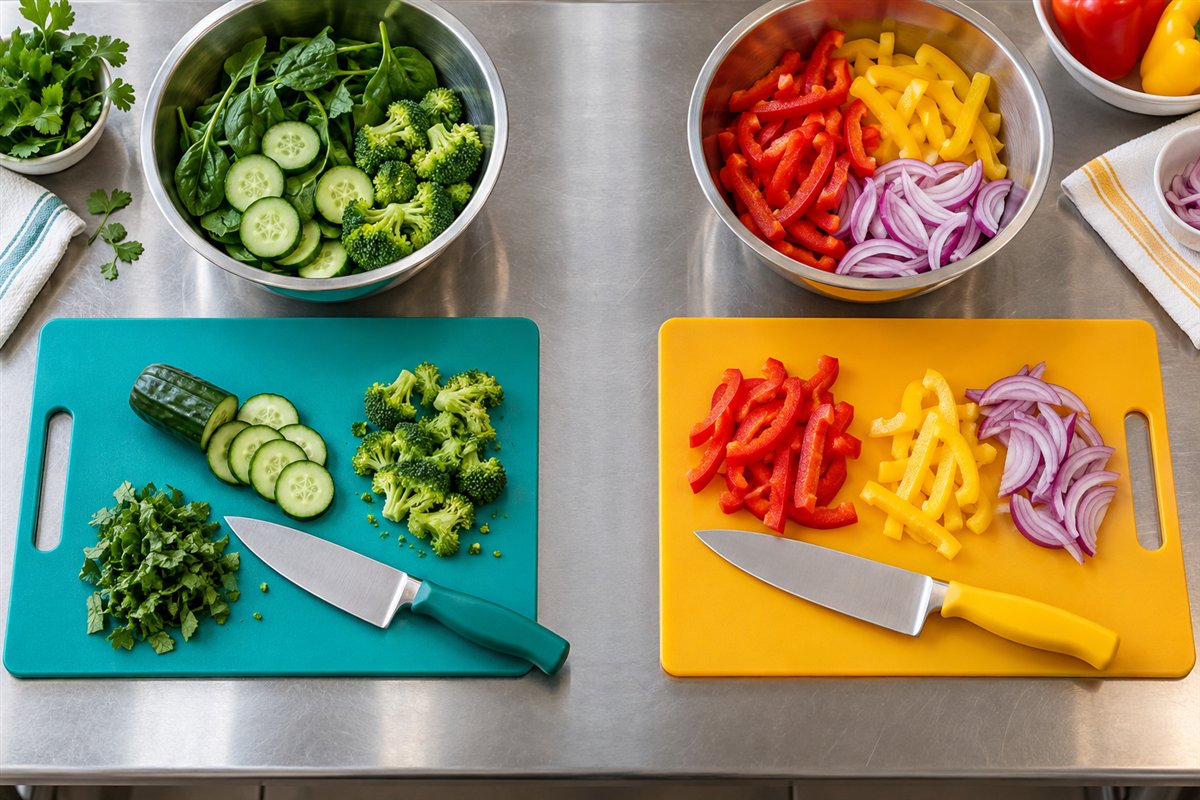
Cross-contact happens when an allergen is unintentionally transferred to food that should not contain it.
Map the journey of food
Think through delivery, storage, preparation, cooking, service and cleaning. Risk can enter at any stage: a leaking packet, a shared scoop, an unwashed board or crumbs left in a toaster.
Separate before you start
Store allergen-containing ingredients below or away from free-from ingredients and keep containers closed. Prepare the free-from dish first in a freshly cleaned area. Use dedicated equipment where effective cleaning is difficult, such as toasters or porous wooden tools.
Clean with a method
Remove visible food, wash with suitable detergent, rinse where required and allow surfaces to dry. Simply wiping crumbs aside is not enough. Wash hands between tasks and change gloves rather than treating gloves as a substitute for hand hygiene.
Control utensils and labels
Use clean spoons for each ingredient and never return unused food to its original container. Label prepared dishes immediately so they cannot be confused later. During service, use separate serving utensils and protect food from drips and crumbs.
Review mistakes
If the wrong ingredient or utensil touches a free-from dish, do not guess that the amount is too small to matter. Set the affected food aside, explain what happened and prepare a replacement using the agreed process.