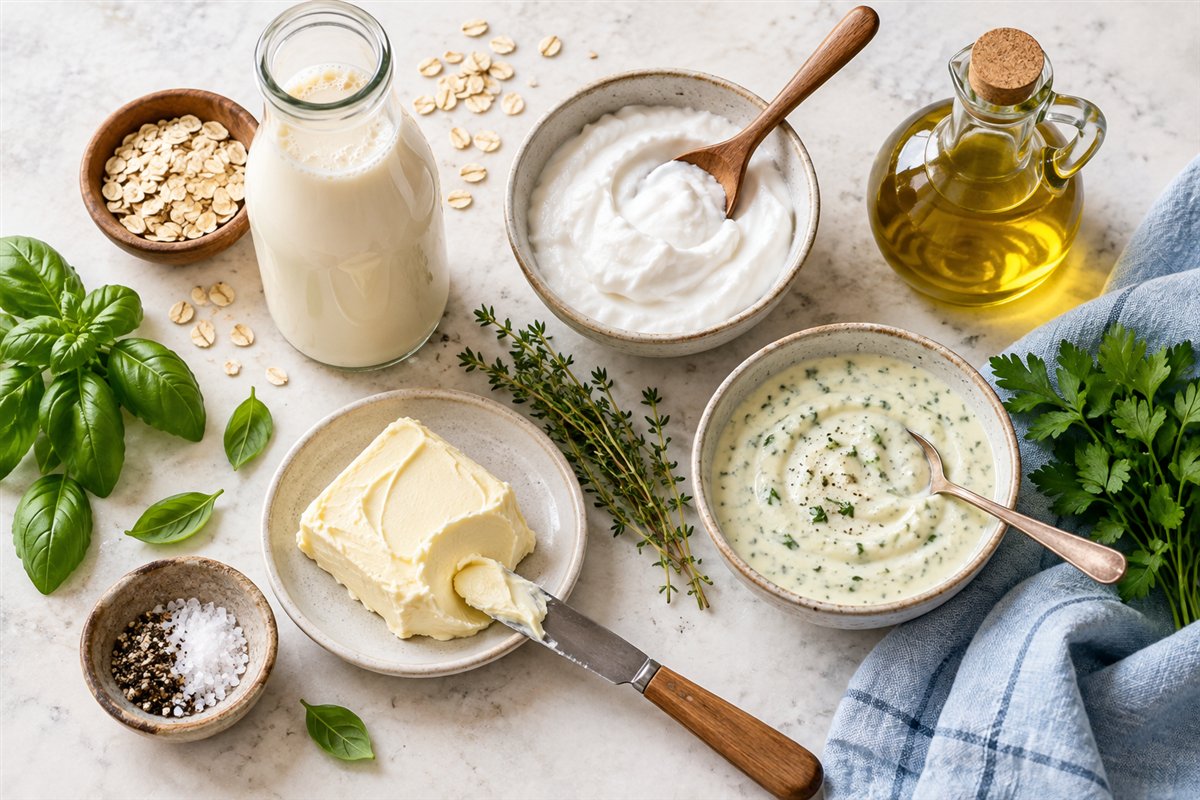
Successful dairy-free cooking is less about one perfect substitute and more about matching the function of the ingredient.
Replacing milk
Unsweetened oat, soya and rice drinks each behave differently. Soya often provides more protein and body, while oat drinks can bring a gentle sweetness. Choose an unsweetened product for savoury recipes and check whether the drink is fortified or flavoured.
Replacing butter
For frying, a neutral oil can work well. For baking, use a dairy-free block or spread designed for baking so the water and fat balance is predictable. Coconut oil can provide firmness but may add flavour and behaves differently at room temperature.
Building creaminess
Pureed vegetables, blended white beans, coconut milk or dairy-free cooking creams can add body to soups and sauces. The best choice depends on whether you need richness, emulsification or a neutral base. Add acidic ingredients gradually because some alternatives split more easily than dairy cream.
Replacing cheese flavour
Dairy-free cheese is one option, but savoury depth can also come from roasted vegetables, herbs, mustard, miso or nutritional yeast. Check every packaged ingredient for allergens and suitability.
Test in small batches
When adapting a recipe, change one ingredient at a time and record the amount used. This makes it easier to adjust moisture, seasoning and cooking time without losing track of what worked.