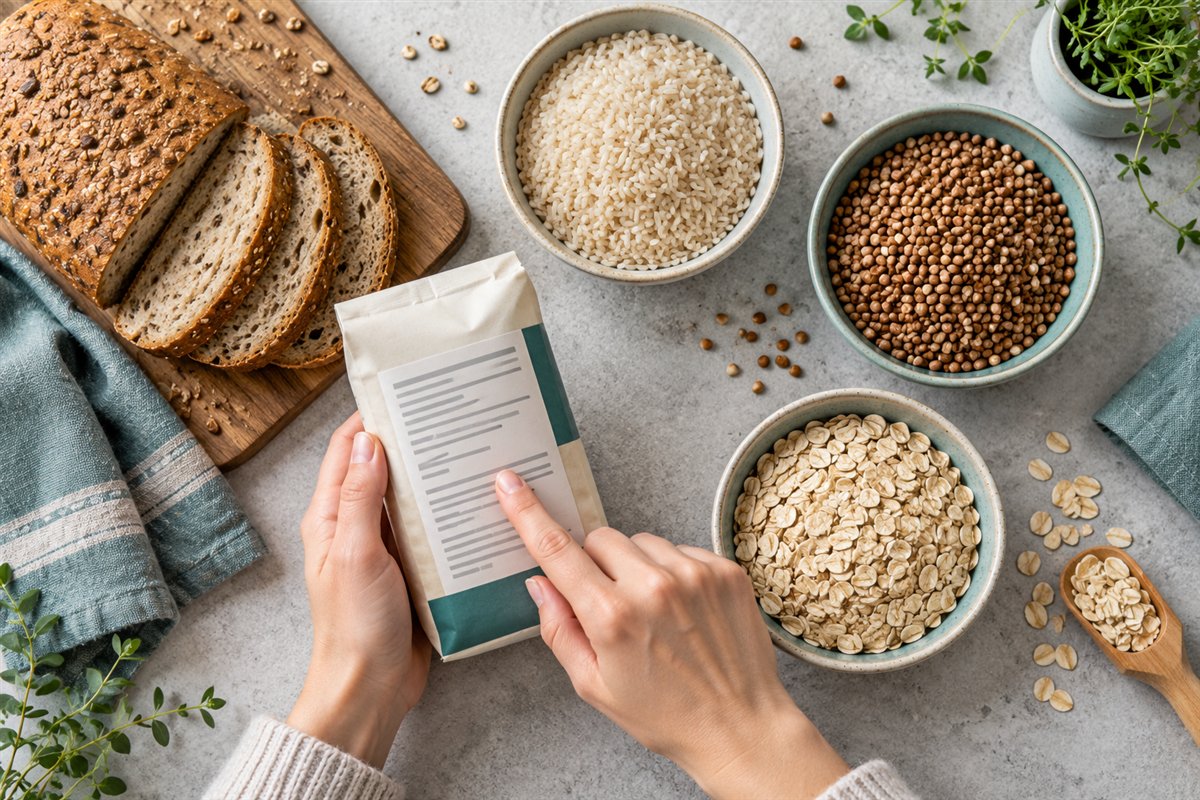
A gluten-free claim is useful, but confident choices come from reading the whole pack rather than relying on one phrase.
Start with the claim
Look for the words “gluten-free” on the packaging and check that they apply to the exact product and pack in your hand. Similar products in the same range can have different recipes, and formulations can change over time.
Read the ingredient list
Scan every ingredient, including compound ingredients such as sauces, flavourings and coatings. In the UK, cereals containing gluten are normally emphasised in the ingredients list when they are deliberately used. Wheat, rye, barley and oats need particular attention. Oats may require additional care because ordinary oats can be contaminated during growing or processing.
Notice precautionary wording
Statements such as “may contain” communicate a possible cross-contact risk. They are different from ingredients that are intentionally added, but they still matter to people who need strict avoidance. A product without a precautionary statement is not automatically suitable unless its full labelling supports that conclusion.
Use a repeatable check
- Confirm the product name and flavour.
- Find the gluten-free claim.
- Read the complete ingredient list.
- Check allergen and cross-contact statements.
- Review preparation instructions, especially for shared ovens or equipment.