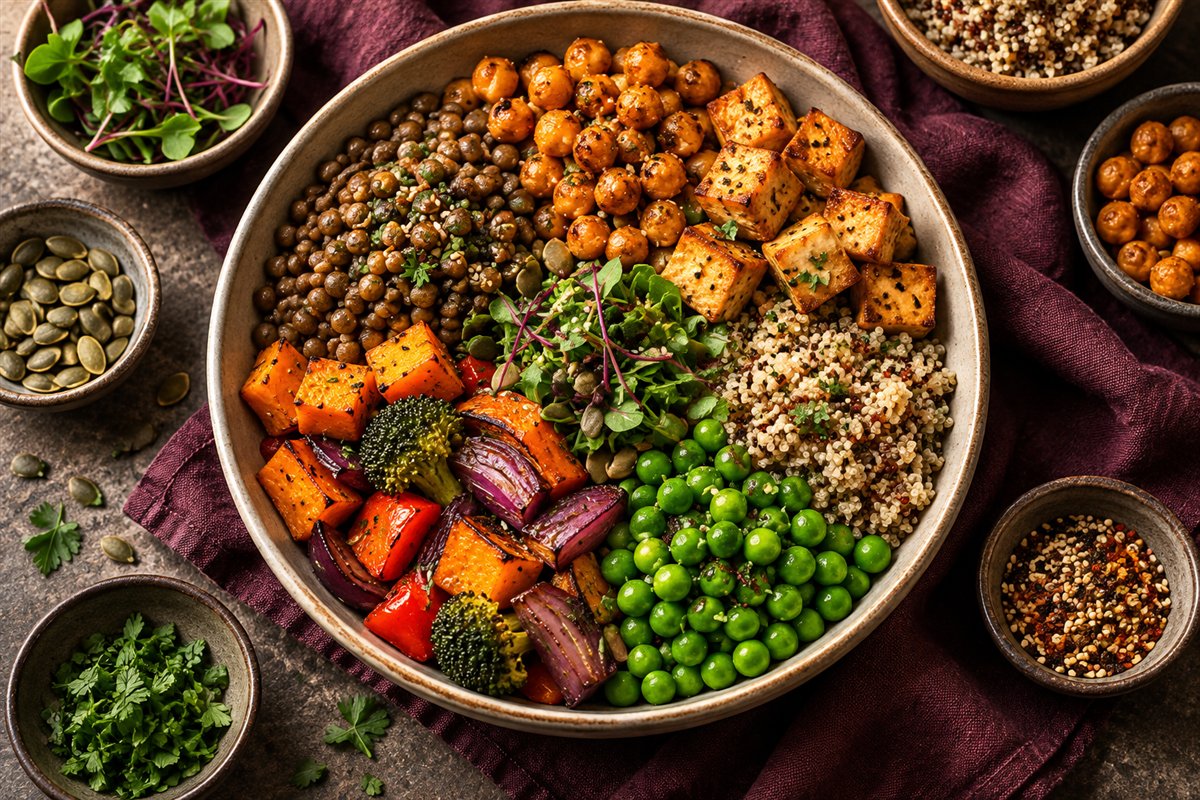
Plant-based meals can provide useful protein when they are built around substantial ingredients rather than treating vegetables as the whole meal.
Choose a protein anchor
Start with beans, lentils, chickpeas, tofu, tempeh, peas or another suitable protein-rich food. If allergies are relevant, confirm the suitability of soya, pulses, seeds and manufactured meat alternatives before use.
Add grains and vegetables
Rice, quinoa, buckwheat, potatoes and certified gluten-free grains can add energy and texture. Include vegetables of different colours for variety. Combining foods across the day is generally more practical than trying to create a perfect combination in every mouthful.
Use texture deliberately
Roast chickpeas for crunch, mash beans for binding, crumble tofu into sauces or simmer lentils until soft. Contrasting textures make a meal more satisfying and help familiar recipes feel complete.
Build flavour in layers
Start with aromatics, toast suitable spices, season the main ingredients and finish with fresh herbs or acidity. Sauces and condiments can add depth, but packaged versions should always be checked for gluten, dairy, nuts and other allergens as appropriate.
Plan for individual needs
Protein needs vary with age, body size, health, activity and life stage. A varied diet matters alongside protein, including sources of iron, calcium, vitamin B12, iodine and omega-3 fats where appropriate.